Los orígenes
Buenos Aires → Torrevieja. El prólogo, sin documentos.
Buenos Aires, 1986. A los cinco años, primera mudanza: de Buenos Aires a Chile. Salió mal y volvieron a Argentina. A los seis, segunda mudanza: sus padres y él se instalan en Benidorm (Alicante). El plan vuelve a salir mal y regresan a Buenos Aires, más pobres, en menos de un año. A los diez, sus padres venden el coche y todas sus posesiones y consiguen reunir tres billetes de avión y 1000 dólares en el bolsillo. De esa guisa regresan a España, esta vez a Torrevieja, a probar suerte. Antes de cumplir los doce ha pasado por más de diez colegios. De la década argentina no queda nada en el archivo; de los primeros años en España, tampoco. Este es el estrato con menos documentos de todo el sitio, y lo decimos tal cual: aquí no hay mito fundacional, hay pocos datos y un año clave.
El año clave es 1998. Tiene doce años y en el mismo año le llegan las dos herramientas que ordenan todo lo que viene después: un bote de spray y un ordenador. Pinta su primera pieza y desde entonces no pasa más de una semana sin pintar. En el ordenador empieza con MS Paint; luego llega Photoshop y lo cambia todo. Una de las primeras cosas que hace: escanear las fotos de sus propios graffitis y corregirles el color. El muro y la pantalla no fueron etapas sucesivas. Llegaron a la vez, y nunca se separaron.
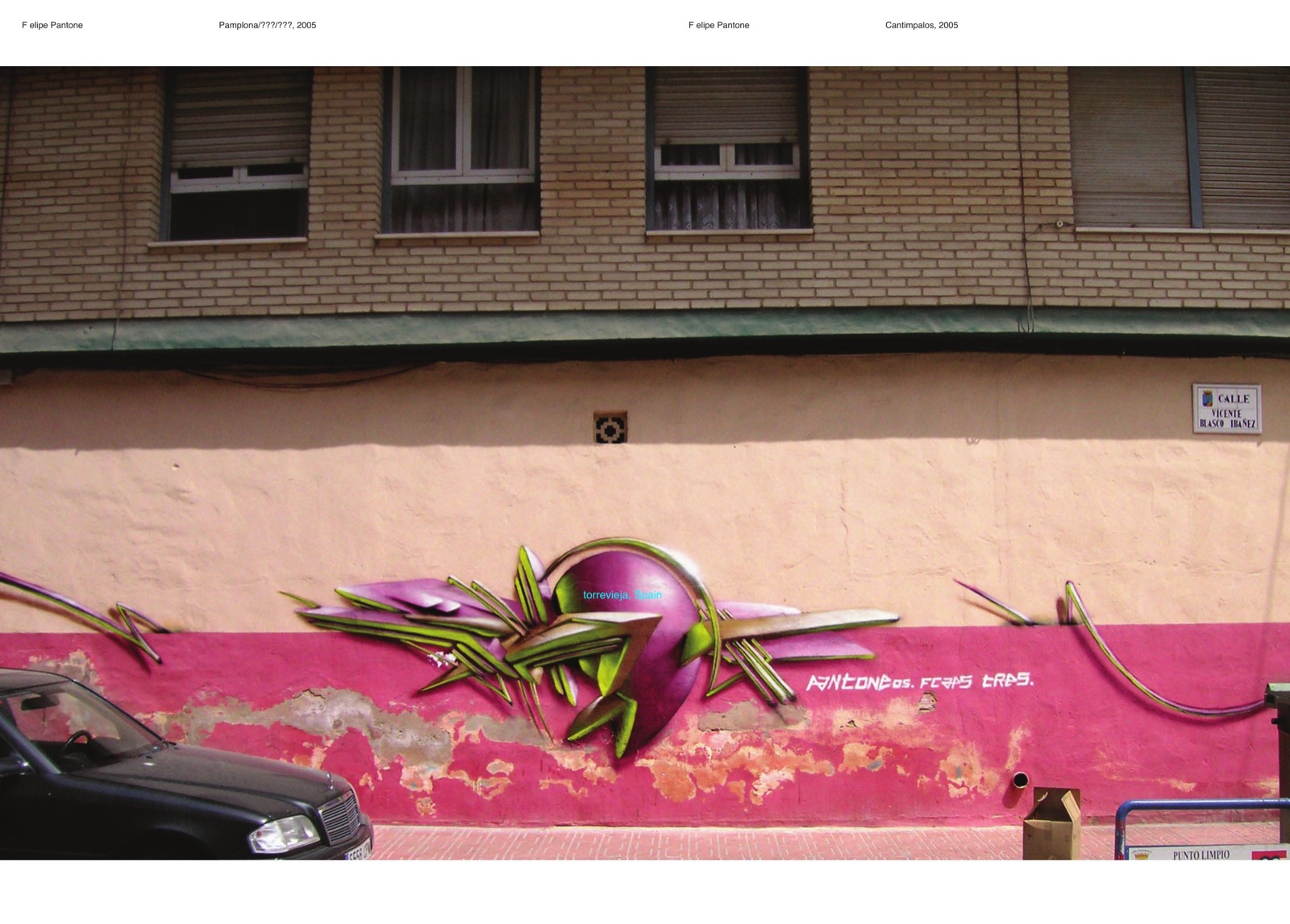
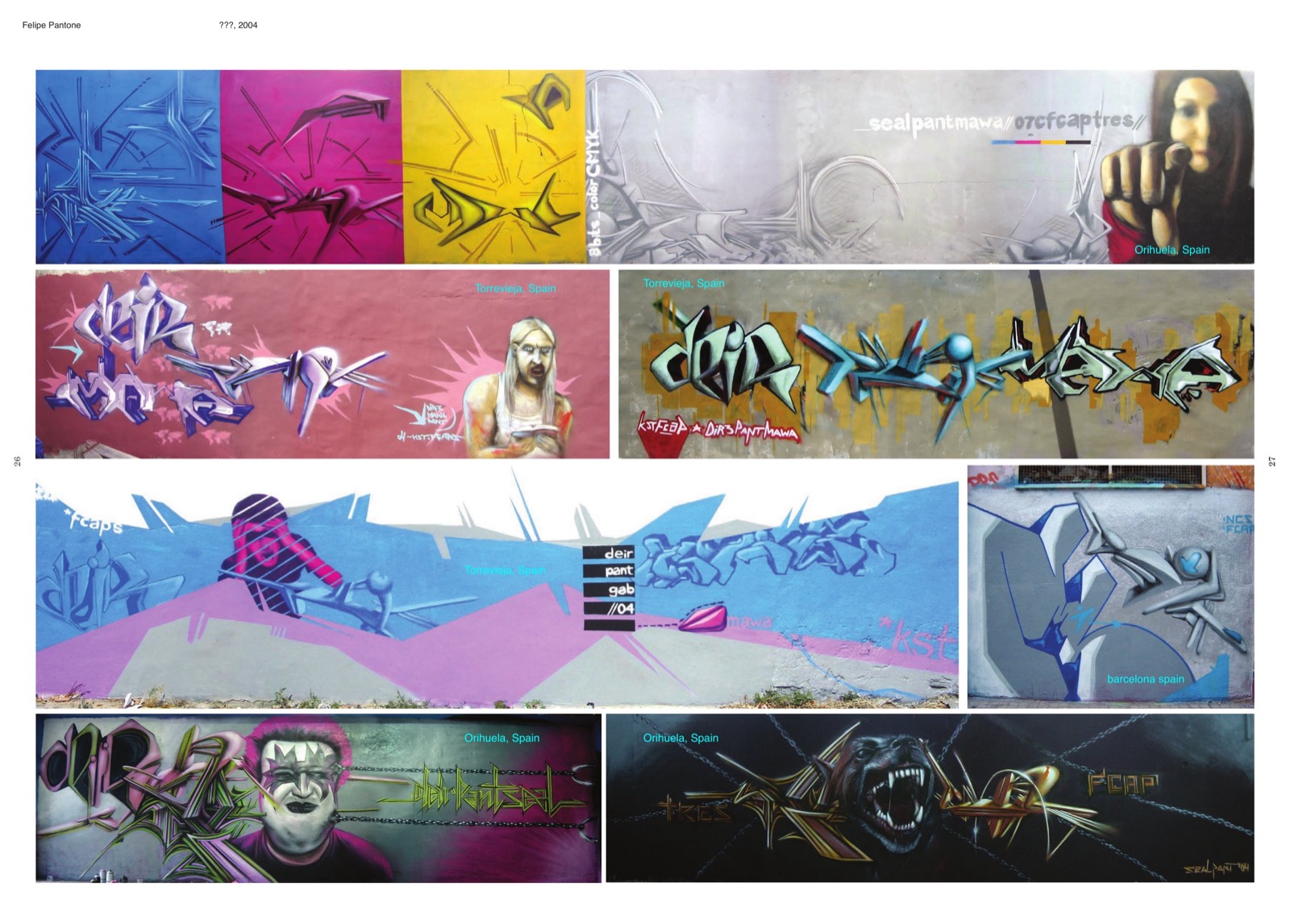
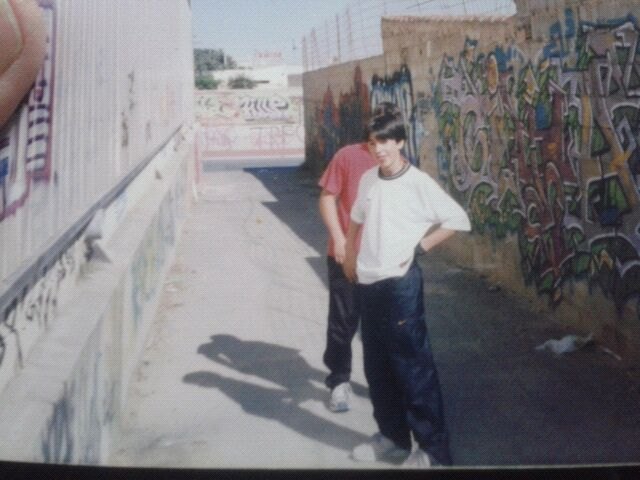
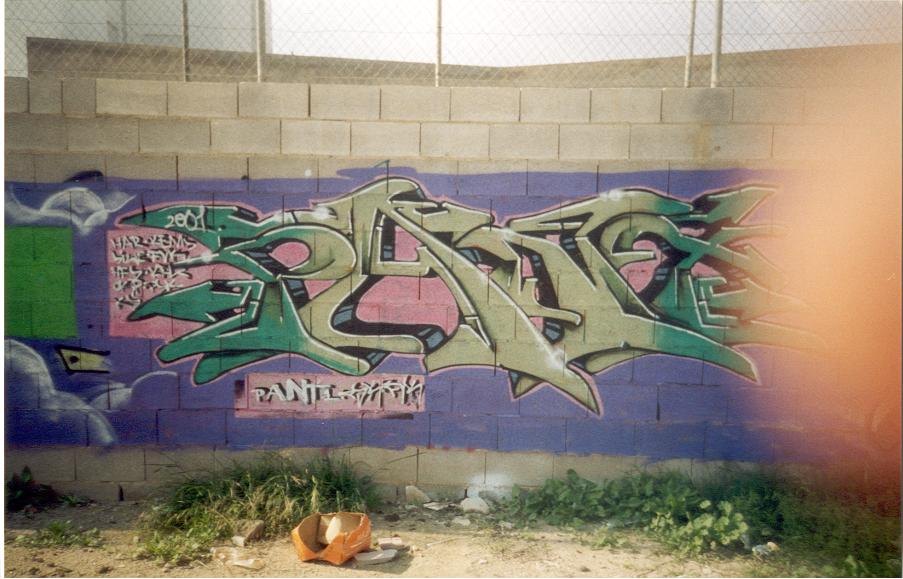
El graffiti no fue una revelación: era el paisaje. En el barrio, los críos pasaban las tardes en la calle — patinando, jugando al fútbol, pintando — y a él siempre le gustó dibujar. Cuando el archivo arranca en 1999, con las primeras fotos fechadas que se conservan, ya firma PANT, y a partir de ahí la práctica es continua. Todo lo anterior se sostiene sobre su palabra, no sobre papeles. Los estratos siguientes desbordan documentos; este es corto porque antes de 1999, sencillamente, no hay imágenes que enseñar.
«A los doce años pinté mi primera pieza, y desde entonces nunca he estado más de una semana sin pintar.»
Felipe Pantone, OCIMAG 2016
- 1986Nace en Buenos Aires, Argentina.Wikipedia · Albertz Benda · monografía FPSTUDIO
- c. 1991Primera mudanza, a los cinco años: Buenos Aires → Chile. Sale mal y la familia vuelve a Argentina.relato de Felipe Pantone
- c. 1992Segunda mudanza, a los seis años: a Benidorm (Alicante). Vuelve a salir mal y regresan a Buenos Aires, más pobres, en menos de un año.relato de Felipe Pantone
- c. 1996A los diez años, sus padres lo venden todo —el coche y sus posesiones—, reúnen tres billetes de avión y 1000 dólares, y prueban suerte en España, esta vez en Torrevieja (Alicante). Él lo cuenta así: «a los diez años mis padres y yo nos fuimos a vivir a Torrevieja».OCIMAG 2016 · relato de Felipe Pantone
- 1986–1998Cambia de colegio más de diez veces antes de cumplir los doce.Juxtapoz, verano 2020
- 1998Primer ordenador, a los doce años. Empieza con MS Paint; después, Photoshop. Entre lo primero que hace: escanear fotos de sus propios graffitis y corregirles el color.Praesentia, entrevista con Roger Gastman (2018)
- 1998Primera pieza pintada con spray, a los doce años, en Torrevieja — el mismo año del ordenador. Activo en el graffiti desde entonces, sin pausas de más de una semana.OCIMAG 2016 · Handstyler 2015
- c. 1998Primer tag: «Cadillac». Después, PANT — el arranque de la cadena documentada Cadillac → Snef → Pant → Pant1 → Pantone.Juxtapoz, verano 2020
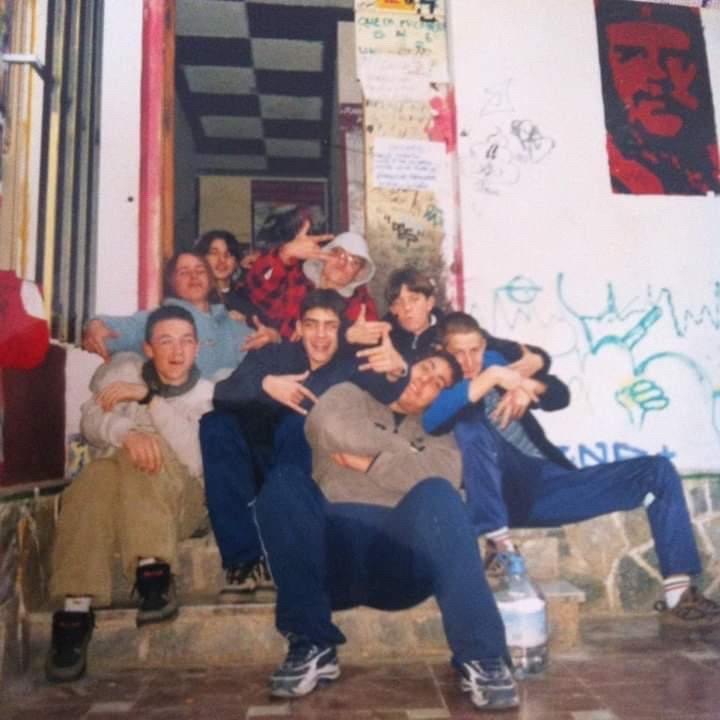
- 1999Primeras fotografías fechadas que se conservan: una pieza «PANT» azul y una foto de grupo de unos ocho adolescentes en la zona de Torrevieja. Aquí empieza el archivo visual; de antes no hay imágenes.Beyond The Streets (libro de grafiti)