El entorno
La obra se expande a la vida: casas, esferas, ciudades enteras.
una de las capas más densas del registro del estudio · sobre el archivo →
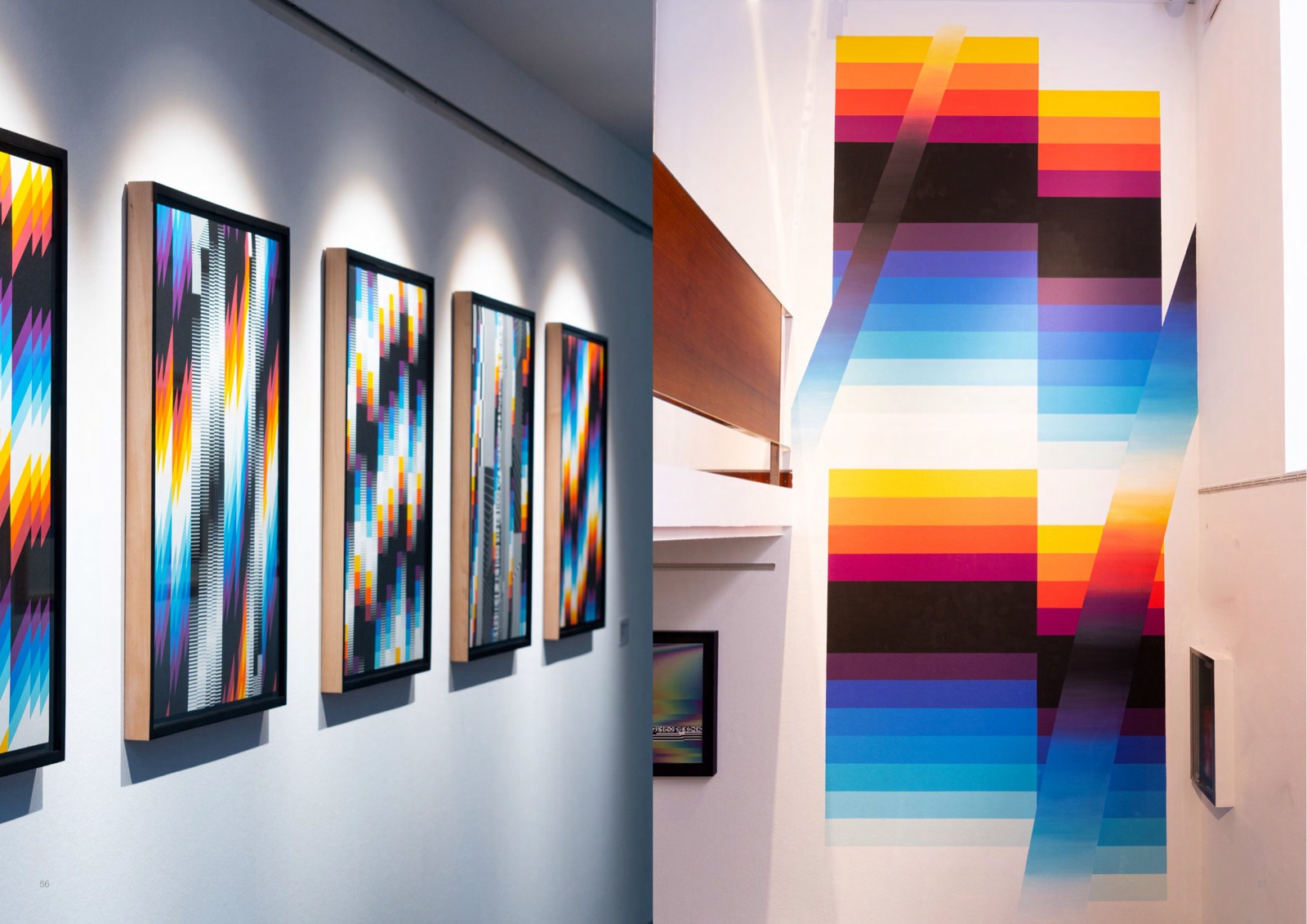
Tres museos miran hacia atrás justo cuando la obra empieza a mirar alrededor. En 2023 la Kunsthal de Róterdam presenta su primera individual de museo; el Centre del Carme la repasa en Valencia, cerca de casa; el MUBAG lo cuelga frente a frente con Eusebio Sempere, 28 obras contra 28 serigrafías, y el mural más grande de la historia del museo se destruye al cierre porque así estaba pensado. En plena retrospectiva, la práctica cambia de soporte: deja de ser un objeto que se cuelga y pasa a ser un sitio en el que se está. Luz, sonido, arquitectura, jardín.
Casa Axis es el centro de gravedad. Un chalet space-age de Valencia, terminado hacia 1975, conocido en la zona como «la casa giratoria»: el cuerpo central debía rotar sobre su eje y nunca llegó a hacerlo. Lo encontró tras años buscando estudio y acabó siendo mucho más: residencia de artistas, estudio nuevo, archivo, y una discoteca subterránea de los setenta restaurada con sonido de Admire Audio. Dentro no hay decoración, hay obra que se usa: una piscina alicatada como una Chromadynamica en la que se nada, un dormitorio con una pared de tela impresa, un garaje con un gradiente de luz cambiante que pinta los coches. Y en las paredes, la genealogía con la que lleva toda la carrera dialogando: Cruz-Diez, Le Parc, Sempere, Olafur Eliasson, Tomás Saraceno, Elias Crespin.
El 29 de octubre de 2024 la DANA arrasó el estudio de producción de Massanassa, con la inauguración de Casa Axis a punto. La respuesta fue de sistema, no de víctima: en poco más de una semana estaba en marcha Auction for Action, con lotes desde 300 euros y la recaudación íntegra para los afectados —nada para su propio estudio—, y en 2025 el mural TERRA DE VALENTIA abrió en Benetússer una ruta de arte urbano en homenaje a los 16 municipios golpeados.
La escala también se hace entorno. En 2024 pinta la obra más grande de su carrera, 25 plantas en Jersey City; en febrero de 2026 sus gradientes ocupan el Exosphere del Sphere de Las Vegas, la mayor superficie LED exterior del mundo, en la misma ciudad donde su mural de 2016 fue demolido: de la pared a la pantalla, diez años después. La facultad de Bellas Artes de la UPV luce una fachada suya de 571.824 teselas de vidrio reciclado que devuelve por la noche la luz que absorbe de día. Mientras el estudio arranca las series nuevas —COLOR SPACE, SVK, DIVERGENT DATA, OPTICHROMIE STRUCTURAL INSTABILITY, aún en producción—, la vía paralela sigue abierta: el graffiti todavía ocupa lugar. El entorno es el soporte; quien activa la obra sigue siendo quien está dentro.
«Aunque mi estudio y mis obras se vieron afectados por la tormenta Dana, no me considero una víctima. Esta iniciativa tiene que ver con levantar a la gente de Valencia.»
Felipe Pantone, Valencia Plaza 2024
- 2023«Prospective», Kunsthal Rotterdam (29 abril – 1 octubre): primera exposición individual en un museo.Kunsthal
- 2023Casa Axis se presenta en público (julio): el chalet space-age de L'Eliana —«la casa giratoria», c. 1975— se convierte en casa, estudio (FPSTUDIO 4.0), residencia de artistas y futuro parque de esculturas. Iluminación de Benoit Lalloz (más de 160 luminarias espejadas), sonido de Admire Audio en la discoteca subterránea restaurada, identidad de Ausias Pérez / T.O.T.designboom 18-07-2023 · Valencia Plaza
- 2023«Prospectiva», Centre del Carme (CCCC), Valencia (29 noviembre, prorrogada hasta el 14 de abril de 2024): primer centro de arte español que repasa su producción, coproducida con la Kunsthal. Abre con «Ultradynamic Range», instalación de luz y sonido con Rosendo Merel y Admire Audio.CCCC · Albertz Benda
- 2023«Eusebio Sempere & Felipe Pantone. Seriación y cromatismo cinético», MUBAG, Alicante (15 diciembre 2023 – mediados de 2024): 28 serigrafías de Sempere frente a 28 obras suyas. Pinta la obra más grande mostrada en el museo, efímera por diseño: destruida al cierre.
- 2024«OPTICHROMIE for Jersey City» (abril), la obra más grande de su carrera: 25 plantas, 70 × 20 m, 25 días, más de 170 galones, dos andamios colgantes, dos terremotos y un eclipse solar durante la ejecución.designboom · GraffitiStreet
- 202429 de octubre: la DANA devasta su estudio de producción en el polígono de Massanassa; Casa Axis sufre daños menores. En noviembre moviliza Auction for Action —Ana Barriga, Okuda, Demsky, Jaime Hayon, PichiAvo, entre otros—: recaudación de €163,795.00 donada íntegramente vía Fundación Coloring the World y entidades locales; nada para su propio estudio.Valencia Plaza 07-11-2024 · Hypebeast
- 2025«TERRA DE VALENTIA. Estabilidad – Interrupción – Claridad», Benetússer (25 septiembre): mural que abre la IV Ruta de Arte Urbano VCF, tributo a las víctimas de la DANA en 16 municipios afectados.Valencia CF
- 2025«Axis of Divergence» (3 octubre): Danysz monta la primera exposición abierta al público dentro de Casa Axis. Debuta Divergent Data: tinta con base de acetona sobre aluminio, con un tríptico de hasta 180 × 450 cm.Danysz
- 2025Año de canon: «Hi-Vis» en el Buffalo AKG Art Museum (con Futura 2000); «Lo tienes que ver» en la Fundación Juan March, sus discos de color giratorios colgados entre Malevich, Klein, Stella, Fontana y Eliasson; y primera individual en Brasil, en Galeria Raquel Arnaud, galería histórica del cinetismo latinoamericano.
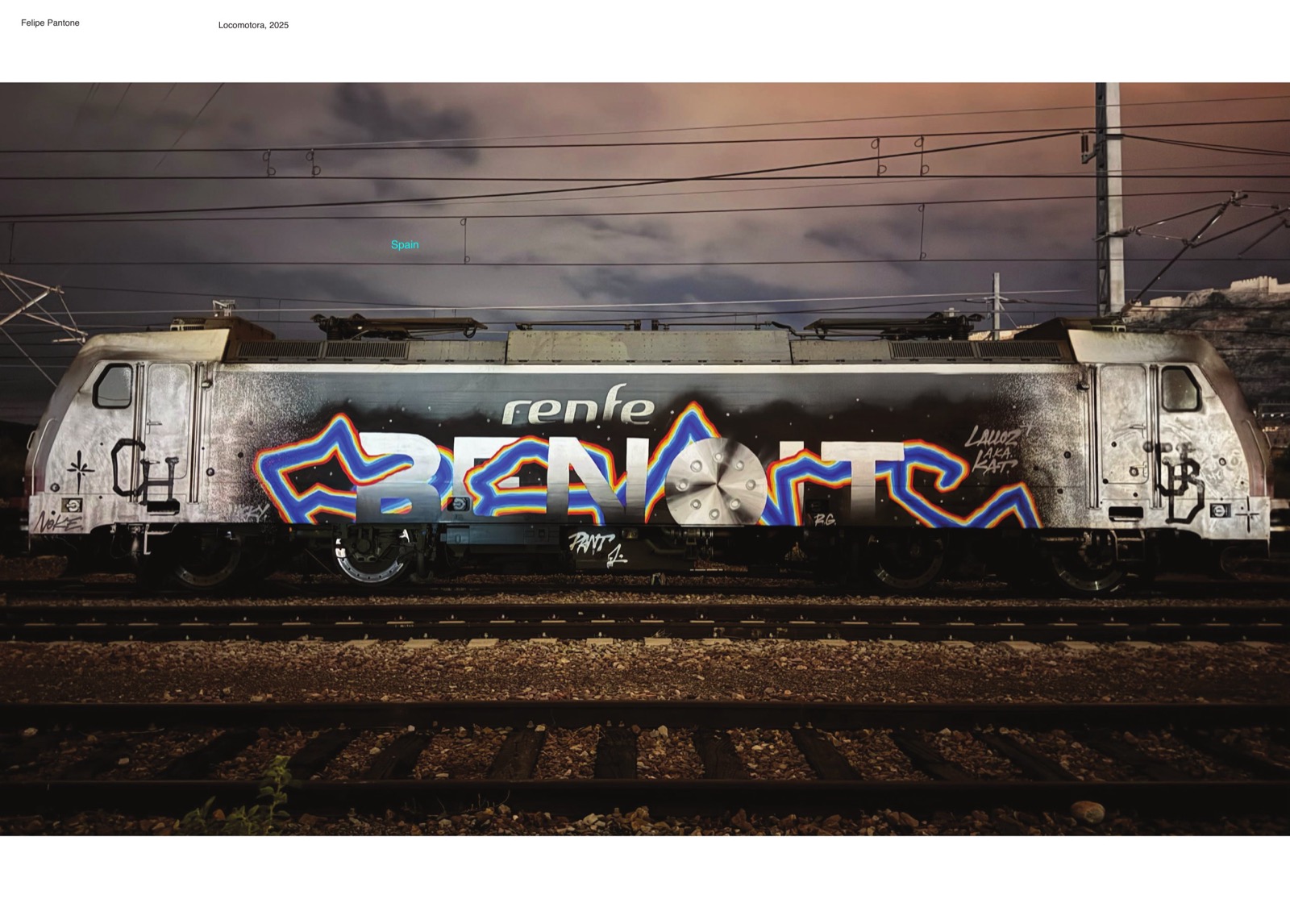
- 2025La vía paralela sigue viva: hay registros de una locomotora eléctrica («Locomotora») y varias unidades de Trenitalia en Catania, Sicilia.
- 2026«Visual Intensification: Focus» en el Exosphere del Sphere, Las Vegas (febrero): la mayor superficie LED exterior del mundo emite sus gradientes dos veces por hora. Motion graphics con Rosendo Merel, sonido de Selecta33. En la misma ciudad donde su mural de 2016 fue demolido: pared → pantalla.Levante-EMV
- 2026Beyond the Streets Paris, Grande Halle de la Villette (27 mayo – 30 agosto): 279 obras vinculadas en el archivo del estudio, su mayor carga expositiva registrada hasta la fecha.
- 2026Primer Casa Axis International Open (13–14 junio): torneo de tenis para 32 artistas sobre la «Hard Court» pintada por MRKA; quien gana se lleva una residencia y el encargo de rediseñar la pista. Meses antes, la residencia de LUCE deja una farola intervenida como primera pieza permanente del parque de esculturas.
- 2026En producción en el estudio: COLOR SPACE (HEXAGONAL), SUBTRACTIVE VARIABILITY KOSMOS, DIVERGENT DATA y OPTICHROMIE STRUCTURAL INSTABILITY. Títulos reales del archivo; medios y medidas por cerrar.