Las letras
El lecho: desde 1998, escribiendo un nombre — y sigue.
Antes de las series, de las máquinas y de los museos hubo un nombre. Varios, en realidad: Cadillac, Snef, Pant, Pant1, Pantone. Entre 1998 y 2013 Felipe trabajó sobre todo una cosa —la firma como práctica, repetida en el tiempo y a distintas escalas— y esa práctica lo entrenó en lo que vino después: escala, ritmo, repetición, presencia. Nada que ver, al principio, con la guía de colores: la coincidencia se descubrió más tarde. El graffiti no es la prehistoria de la obra. Es su primer sistema.
El graffiti también enseña que una obra puede ser breve: se pinta, se fotografía y se deja ir. El registro se sostiene en la foto y en el oficio. La escena fue su primer contexto —GRAFFILIA, FCAP, KST, D.O.C.S., y desde 2011 UltraBoyz—, y en ella probó estilos distintos, del wildstyle a los personajes, el fotorrealismo y la caligrafía, hasta quedarse con el suyo por eliminación.
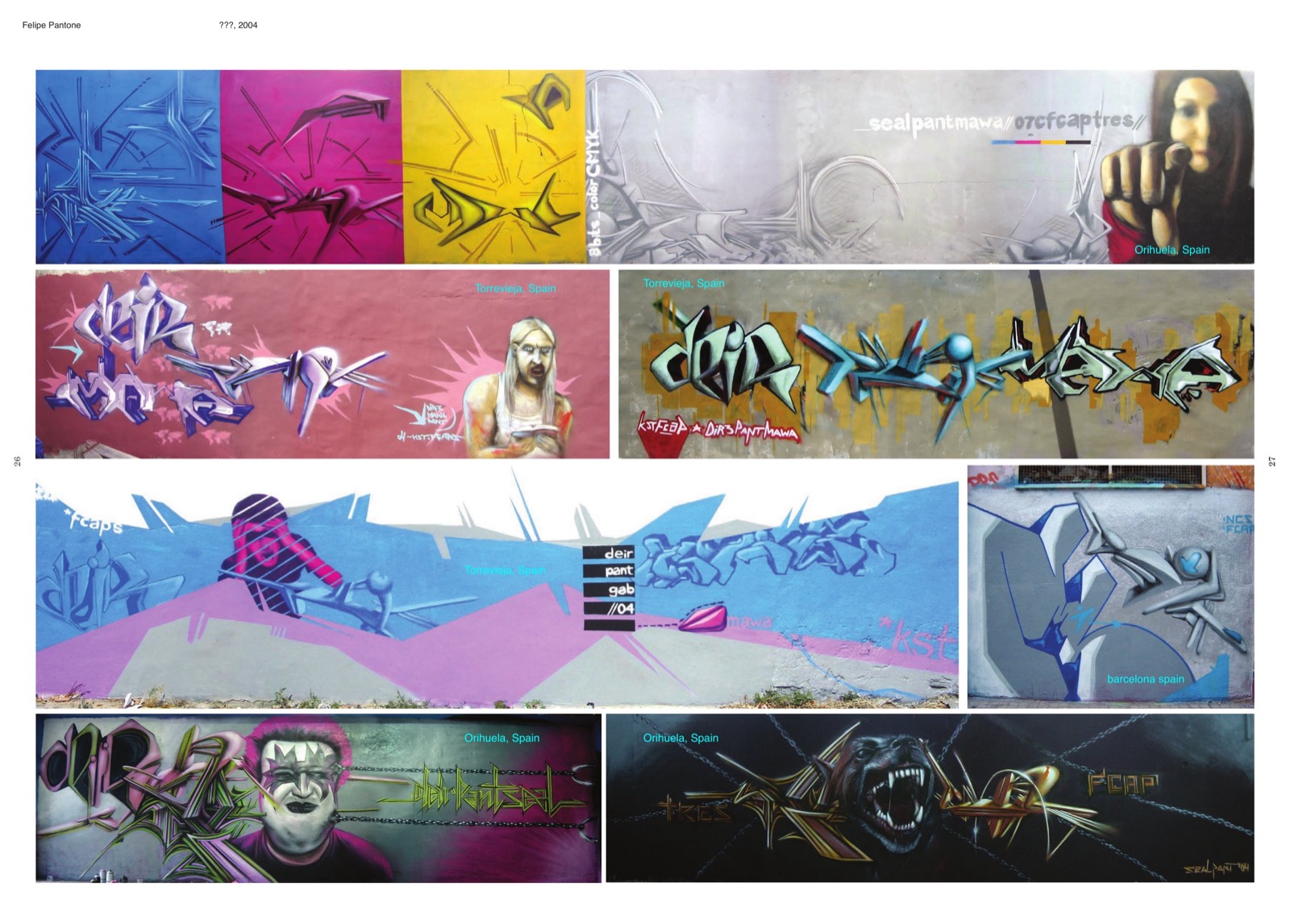
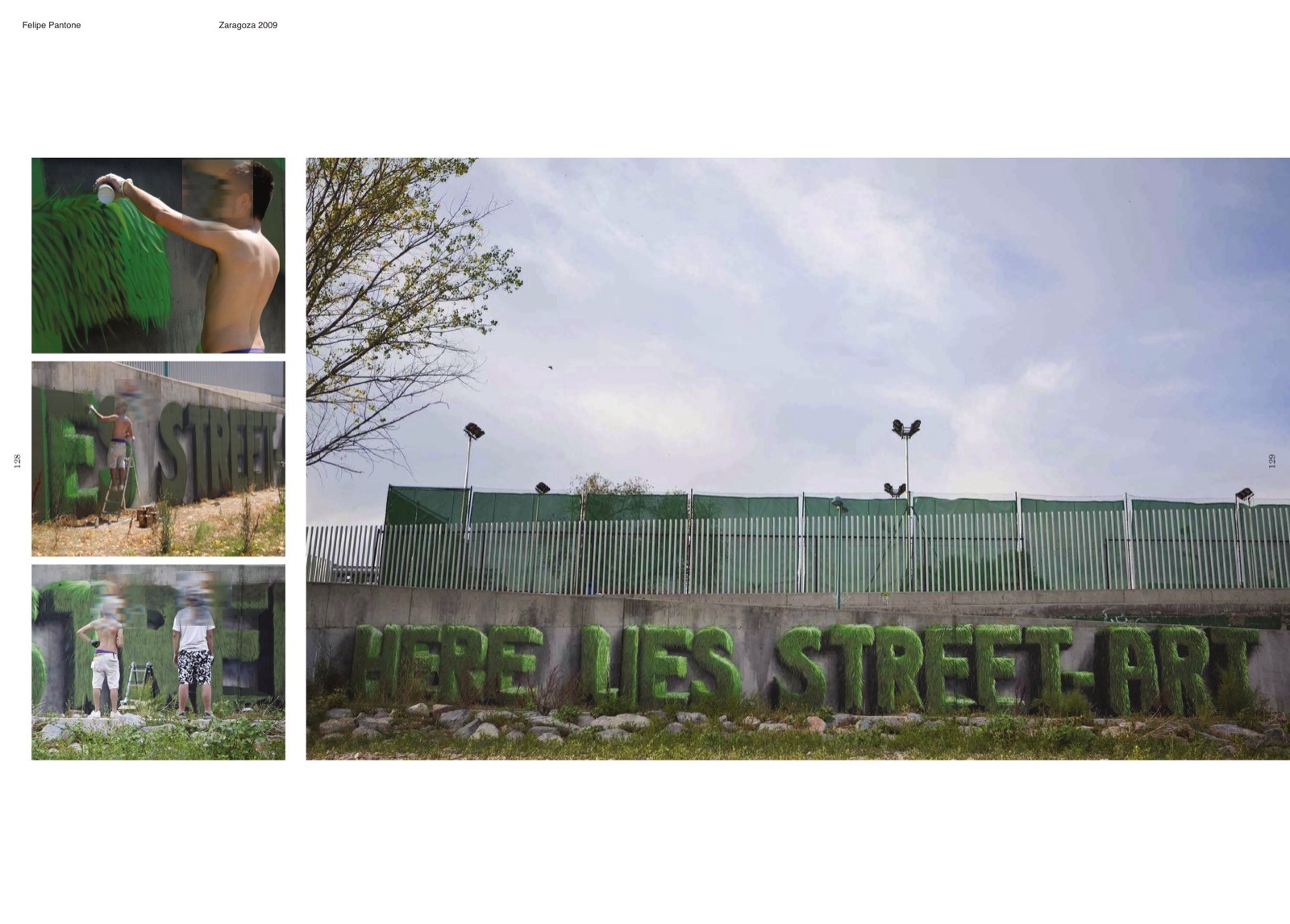
Las pistas del programa cromático están pintadas en la pared con años de antelación. 2004, Orihuela: un muro con barra de color CMYK y la inscripción "8bits.color.CMYK", la primera referencia a un sistema de color de todo el corpus. 1999, Torrevieja: el primer "PANTONE" pintado en una calle. 2005: forma parte del Spanish Writer Team de Montana Cans; por primera vez la invitan a un viaje fuera de España para poner su nombre en Heidelberg, Alemania. 2006: funda D.O.C.S. con Ausias Pérez y empiezan los experimentos con las letras, la ilustración tipográfica. 2009: el concepto entra del todo — "HERE LIES STREET-ART" en letras monumentales de césped, el epitafio del boom del street-art pintado por alguien de dentro.
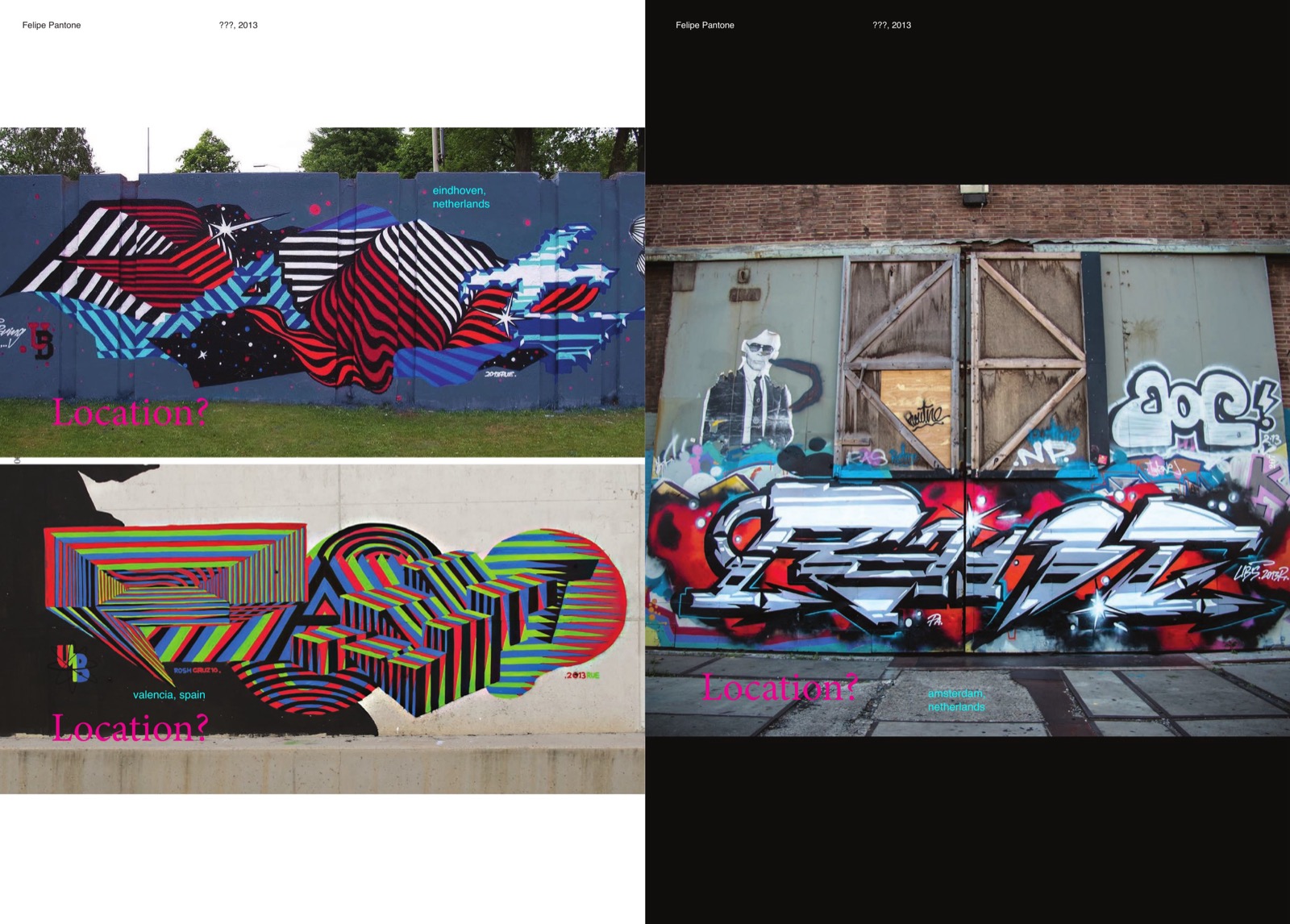
La era termina como empezó: en la calle. En 2011 entra en UltraBoyz y trabaja un año como asistente de SEEN en Valencia; en 2012 pinta su primera fachada monumental en Ucrania; en 2013 el op-art se come las letras: campos de moiré, líneas RGB, el nombre disolviéndose en óptica pura. De ahí sale todo lo demás. Y la práctica de la calle, en paralelo, sigue presente: el libro que documenta esta era llega hasta 2025.
«Mi primer tag, escucha esto, estoy muy orgulloso: mi primer nombre fue «Cadillac». ¿A que es bueno?»
Felipe Pantone, Juxtapoz 2020
- 1998Primera pieza pintada a los doce años en Torrevieja (Alicante). Primer tag: Cadillac; luego Snef, después Pant. Desde entonces, nunca más de una semana sin pintar.OCIMAG 2016, Juxtapoz 2020, Handstyler 2015
- 1999–2000Primeras fotos fechadas: pieza "PANT" en bloques azules y foto de crew de unos ocho adolescentes, zona de Torrevieja. En 2000, primer tren: throw-up blanco sobre panel de ventana.Beyond The Streets (libro de grafiti)
- 2003Primer pivote de estilo: las letras se vuelven formas abstractas, casi de máquina, con halos de línea de circuito. Torrevieja, Orihuela, Barcelona, Alicante, Madrid.Beyond The Streets (libro de grafiti)
- 2004Muro de Orihuela con barra de color CMYK pintada y la inscripción "8bits.color.CMYK": la primera referencia a un sistema de color en su graffiti. Las crews FCAP y KST se repiten desde este año. Hacia 2006 (año exacto por verificar) se muda a Valencia y pinta con D.O.C.S.Beyond The Streets (libro de grafiti) · Wikipedia · sprayplanet
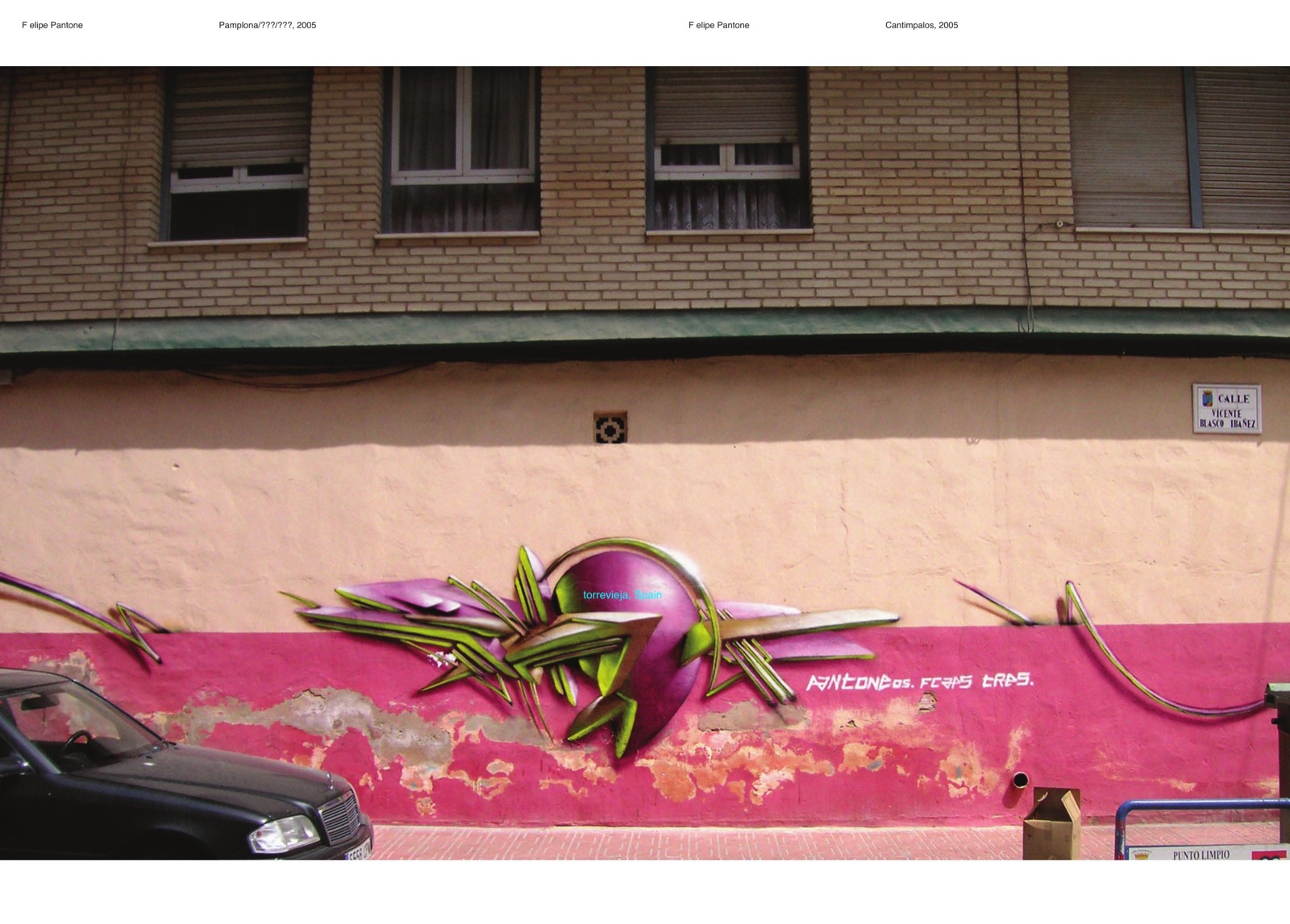
- 2005"PANTONE 05. FCAPS TRES.", muro de calle en Torrevieja. Primeros viajes de graffiti por Europa; muros en Heidelberg con SEAL. Relación con Montana Cans "oficialmente desde 2005".Beyond The Streets (libro de grafiti) · Praesentia · Montana Cans 2018
- 2006Empieza Bellas Artes en la Facultad de San Carlos de Valencia (UPV). En la pared: jam multitudinario de varios escritores en el paso subterráneo de Torrevieja; "Pant1 06" en Barcelona.Praesentia · Beyond The Streets (libro de grafiti)
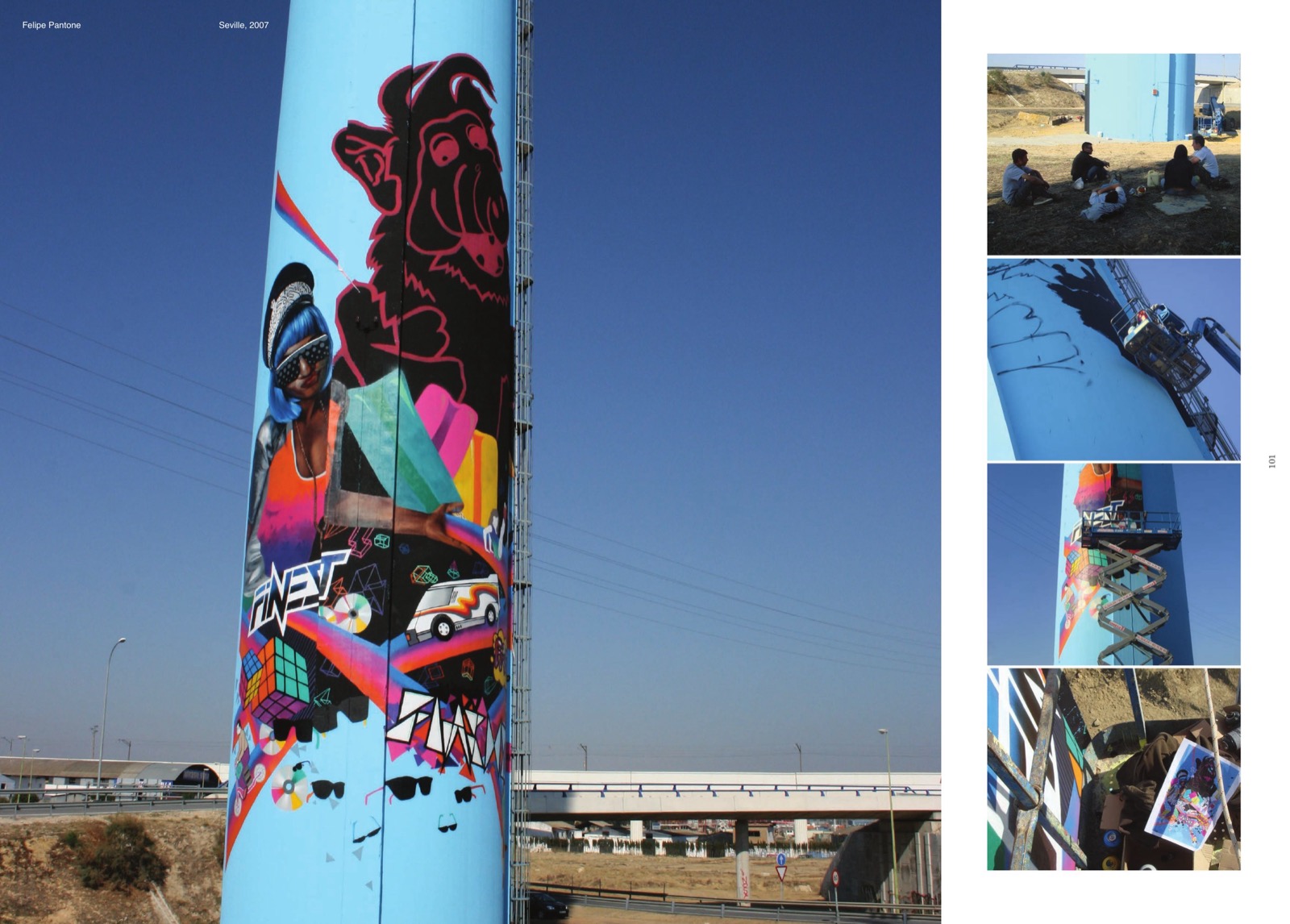
- 2007Año de salida. Torre de agua de Sevilla —Alf, cubo de Rubik, "FINEST"— pintada desde plataformas elevadoras con referencia impresa. Azotea del South Bronx: "I ♥ NY", firmada "PANTONE.GRAFFILIA.SOUTHBRONX." y fechada 1.OCT.2007. Londres: pieza del coche de policía, "To the boys in blue… …catch me if you can." Primera exposición: la muestra inaugural del espacio Mr. Pink de Valencia es suya; la directora María Tinoco lo había descubierto pintando en la calle.Beyond The Streets (libro de grafiti) · monografía FPSTUDIO · Valencia Plaza 2014
- 2008PANTONE por todas partes: letras heráldicas planas ("EL ZURDO", las producciones gemelas GOD FELLAS en Sevilla y Bilbao), mercancías RENFE bajo el nombre PANTONE, primeros experimentos de letra glitch y scanline. Colaboración en Gante (Bélgica).Beyond The Streets (libro de grafiti)
- 2009Segundo pivote: entra el concepto. Murales de texto que satirizan el boom del street-art: "HERE LIES STREET-ART" (Zaragoza, letras monumentales con textura de césped), "it's NOT YOU, it's ME", "Doing Only Crooked Shit" (D.O.C.S. escrito entero, con sellos en Bruselas, País Vasco y Ámsterdam). Letras fantasma proto-glitch. Trenes en Milán con DEIR y BLOK.Beyond The Streets (libro de grafiti)
- 2010Un año en Leeds (por verificar; el libro documenta muros en Leeds, 2010) (Erasmus); graffiti en Leeds y Londres. En Valencia pinta "future is now": el lema precede a la carrera de estudio por años. Muro en colaboración con ARYZ + DOCS.Praesentia · Beyond The Streets (libro de grafiti)
- 2011Entra en UltraBoyz, crew europeo. Richard "SEEN" Mirando monta estudio en Valencia y lo contrata como asistente durante un año. Muchos viajes a París llevando obra de SEEN a las galerías desde Valencia. El libro documenta también varias piezas en el metro de París.Praesentia · Beyond The Streets (libro de grafiti)
- 2012La escala y la abstracción llegan a la vez. Primera fachada monumental: Kamianets-Podilskyi (Ucrania), festival Respublica, con Demsky — confirmado por el artista: tren de ocho horas sin agua hasta Kiev, luego cuatro horas de baches, y una grúa soviética manejada por un tipo que iba bebiendo. Inscrita "КРІЗЬ ГАЛАКТИКУ ДО ЗІРОК" ("a través de la galaxia hasta las estrellas"). Primera abstracción pictórica sin letras (puertas de garaje, España). Primer viaje documentado a Japón: pieza plateada en una azotea.Beyond The Streets (libro de grafiti) · relato de Felipe, 4 jul 2026
- 2013El op-art disuelve las letras dentro del propio graffiti: pieza de Eindhoven construida solo con campos de rayas y moiré; pieza RGB de líneas concéntricas en Valencia; op PANT firmado "F. PANTONE 2013" en Ámsterdam. El 23 de octubre, Carlos Cruz-Diez le escribe para felicitarle por una pieza de graffiti dedicada al maestro: "¡¡¡Bravo, mi querido artista, que buenas variantes has encontrado en mi obra!!!"Beyond The Streets (libro de grafiti) · Praesentia · Valencia Plaza 2019