Los sistemas
El pivote pandémico: la obra como sistema de estados posibles.
una de las capas más densas del registro del estudio · sobre el archivo →
En 2020 los aviones se paran; el estudio, no. La primavera del confinamiento queda firmada con un código QR pintado a espray — presentado en su propia web como "the LARGEST spray painted QR CODE on Earth" — que se reconfigura para llevar a un mensaje de calma: quédate en casa, ya casi está. En julio, la exposición de Nueva York se titula CONTACTLES⟷S y cada obra cinética tiene un gemelo WebGL que se maneja desde el navegador, desde cualquier parte. En Le Locle, Suiza, la fachada de la manufactura Zenith se ejecuta en remoto, en plena pandemia, en una ciudad Patrimonio de la Humanidad. El taller llevaba años construyéndose como sistema; 2020 fue la prueba de carga. El graffiti, mientras tanto, no se confina: mercancías, cercanías y varias cosas en Italia.
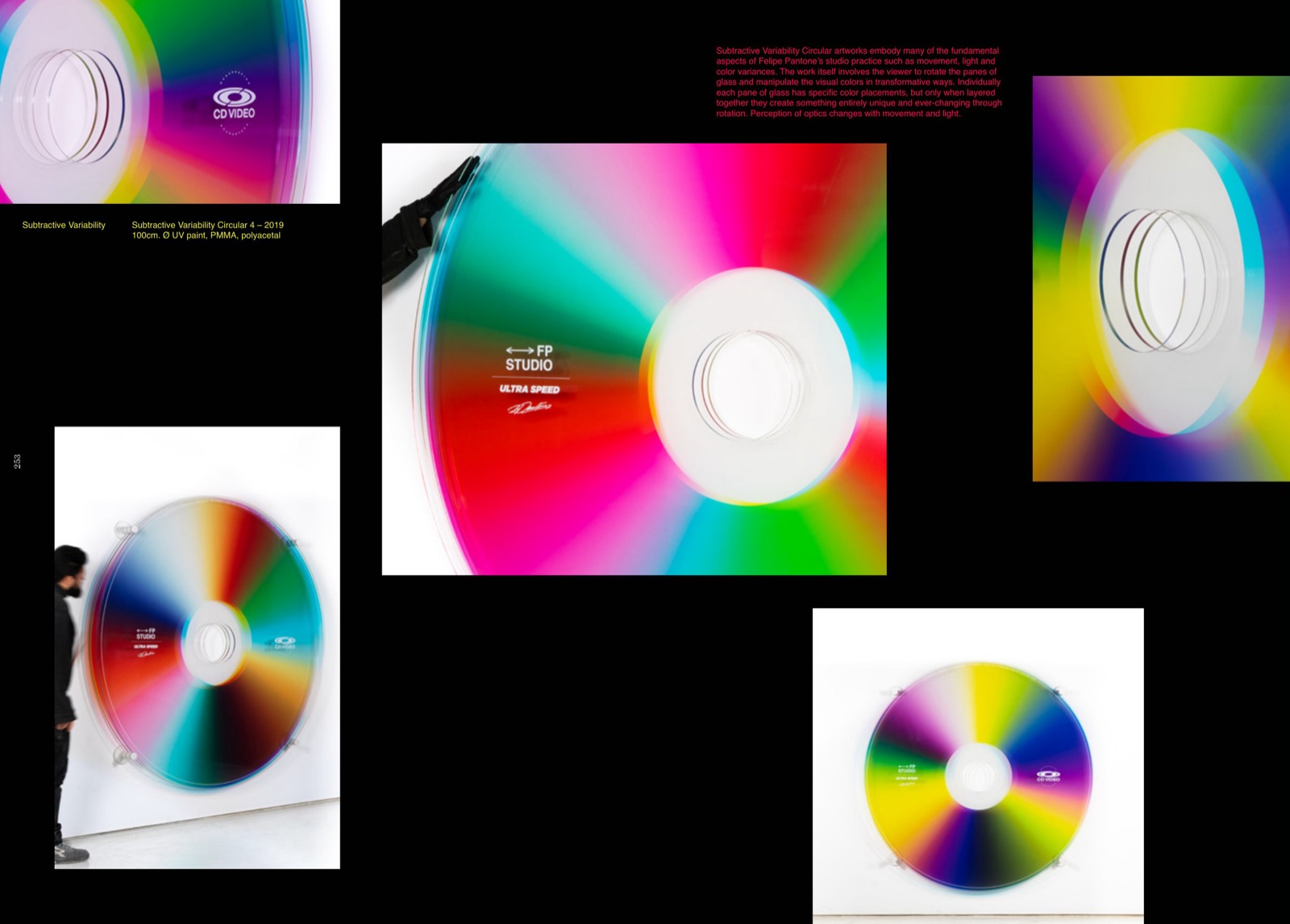
2021 empuja la misma lógica más lejos. En marzo colabora con Nifty Gateway en sus primeras piezas y hace THE GRAFFITI COLLECTION, firmados PANT1: piezas de graffiti ya borradas de la pared, fijadas en cadena de bloques — una respuesta técnica al problema más viejo del graffiti, que es desaparecer. El mismo año, un plano de casa se vende como edición de 300 (Casa Variable, con Pablo Limón), una pintura RGB se controla desde el teléfono (Additive Variability) y el estudio imprime su propia monografía en Valencia, en CMYK más una tinta fluorescente. Configurable Art, lanzada en 2018, absorbe la nueva mecánica: manipulables, discos que giran, obras que el comprador termina con una app.
2022 es el año de más producción que registra el archivo del estudio — el grueso, ediciones y piezas cinéticas. La abundancia no es un accidente; es el sistema funcionando. En Tokio, la primera individual grande en Japón desde 2014 se titula Manipulable y todas las obras se tocan: el espectador las mueve, o la obra no cambia de estado. Sale impreso Praesentia — 308 páginas, diez años de trabajo, cerrado en pleno 2020 —, sale el segundo reloj Zenith con moiré micrograbado en zafiro, y en octubre vuelve el muro pintado a mano: 35 × 9 metros en la avenida Faria Lima de São Paulo, diez días, y un título que es la velocidad de la luz: 300,000 Km/s.
«Hoy todo es manipulable: ya no escuchamos la radio, nos montamos nuestras propias listas; no vemos la tele, elegimos qué series poner. Internet ha hecho configurable la propia información.»
Felipe Pantone, designboom 2022
- 2020Primavera: código QR "STAY HOME" pintado a espray, presentado como "the LARGEST spray painted QR CODE on Earth". El código funciona: enlaza a un mensaje de esperanza y paciencia en felipepantone.com/stayhome.felipepantone.com/stayhome
- 202016 jul – 28 ago: CONTACTLES⟷S en Albertz Benda, Nueva York. Obras cinéticas con gemelo digital en WebGL en contactless.felipepantone.com, manejables desde el navegador. Inicio de la relación con la galería.Albertz Benda
- 2020Fachada de la manufactura Zenith en Le Locle (Suiza), ejecutada en remoto durante la pandemia en una ciudad Patrimonio de la Humanidad; presentada en enero de 2021. Primera colaboración de este tipo entre una manufactura relojera y un artista contemporáneo, según la federación relojera suiza.FHS · Zenith
- 2020Integration System P#01: el público termina la obra desde una app — 5.642 configuraciones posibles, cada combinación ligada a un código único. A la venta en configurableart.com.configurableart.com
- 2021Marzo: colabora con Nifty Gateway — THE GRAFFITI COLLECTION, firmados PANT1: T1: Rome, M1: Monterrey, G3: Valencia. Piezas de graffiti ya borradas, conservadas en cadena de bloques.Hypebeast 2021
- 2021Zenith DEFY 21 Felipe Pantone, primer reloj de la colaboración; agujas distorsionadas con PVD arcoíris. La pieza única para Only Watch se adjudica por 480.000 CHF (por verificar).Zenith · Only Watch
- 2021Abril–noviembre: programa Alpine F1 en tres actos — show car y casco en los Campos Elíseos, art cars A110S en el GP de Mónaco, graffiti en directo en el garaje con Alonso y Ocon en el GP de Ciudad de México.Alpine media
- 2021Octubre–noviembre: Casa Variable, con el diseñador Pablo Limón, en Danysz, París. Un plano de casa vendido como edición de 300: la arquitectura entra en el sistema de ediciones — la bisagra conceptual hacia Casa Axis.Danysz
- 2021Julio: FPSTUDIO publica la monografía de Belén Chico Moreno (tesis UCM 2018–19), impresa en La Imprenta CG, Valencia: CMYK más tinta fluorescente Pantone 803C. El estudio funciona como su propia editorial.
- 2022Pico de producción de todo el archivo del estudio: ningún año depositó más obra que 2022. El grueso, ediciones y manipulables; entre ellas, la butaca Archibald para el 110 aniversario de Poltrona Frau (ed. 110).
- 20223 jun – 17 jul: Manipulable en GALLERY COMMON, Tokio — primera gran individual en Japón desde 2014. Nueve obras cinéticas, todas configurables por el visitante: el espectador mueve la obra o la obra no cambia.designboom · GALLERY COMMON
- 2022Junio: se publica Praesentia (Beyond the Streets × Gingko Press): 308 páginas, diez años de trabajo, sobrecubierta con moiré; dentro, el manifiesto de 2013, el facsímil del email de Cruz-Diez y el ensayo de Peiró. La edición se había cerrado en julio de 2020.Hypebeast
- 2022Octubre: Zenith DEFY Extreme Felipe Pantone (ed. 100), con moiré micrograbado en zafiro a partir de la serie Planned Iridescence.Zenith
- 2022Octubre: 300,000 Km/s en São Paulo — 35 × 9 m en la avenida Faria Lima, pintado a mano en diez días para el festival NaLata; el título es la velocidad de la luz.NaLata · Street Art News